Observe the real dead ends
The Theme App Embed records normalized paths on the Shopify 404 template. Known bots are separated, and sensitive-looking paths are discarded.
Find the 404s shoppers actually hit, verify a live destination, and create native Shopify redirects—without handing automation unrestricted control of your storefront.
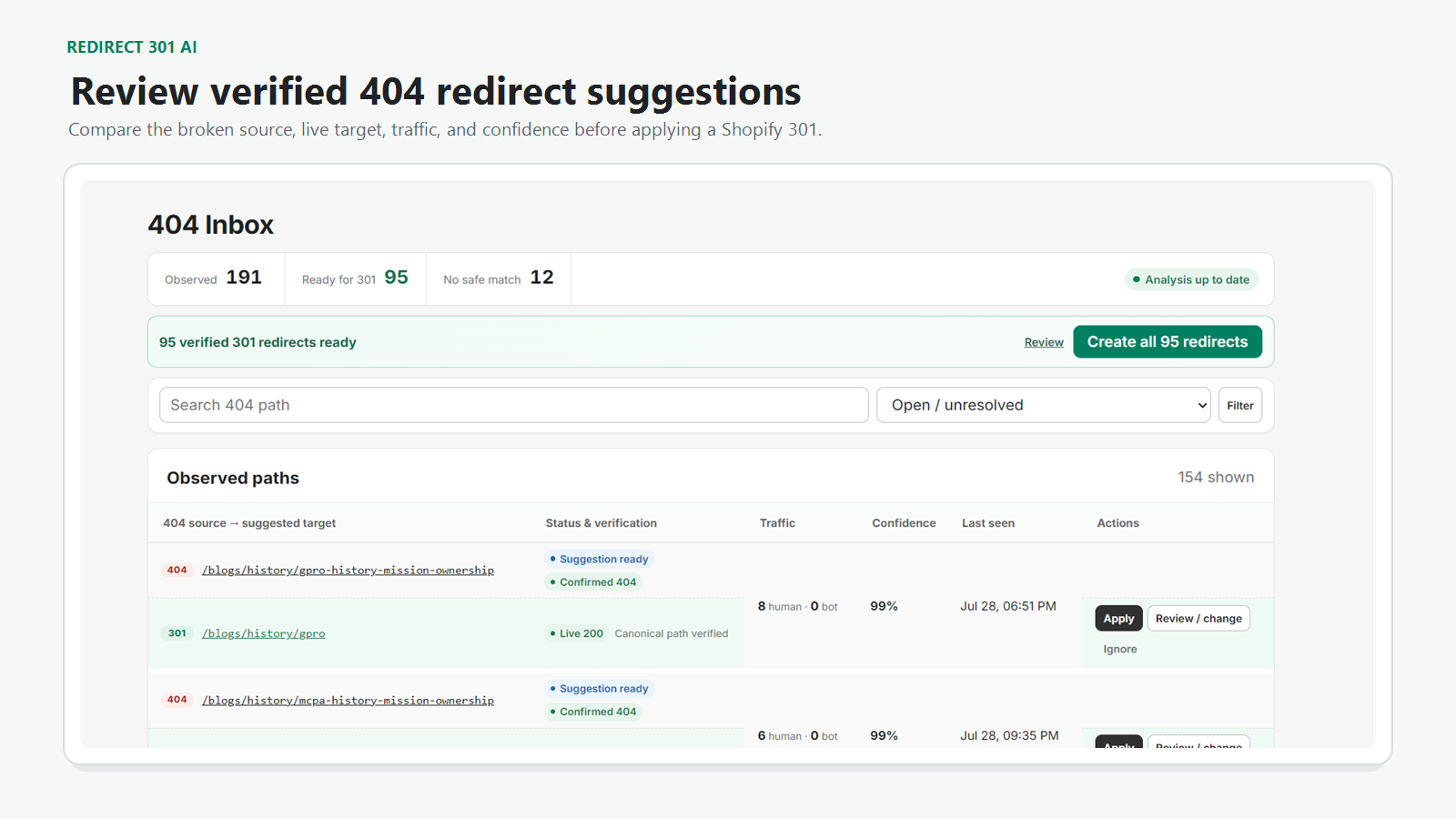
One focused workspace for the redirect lifecycle
Redirect 301 AI combines storefront evidence, catalog context, and live checks before a redirect is ready for review.
The Theme App Embed records normalized paths on the Shopify 404 template. Known bots are separated, and sensitive-looking paths are discarded.
Suggestions are narrowed by resource type, checked against the published catalog, and confirmed live before they can move forward.
Preflight checks run again, conflicts are left for review, and Shopify receives an exact source-to-target redirect—not an unrestricted wildcard.
From the first observed 404 to the final Shopify record, every stage stays visible and reviewable.
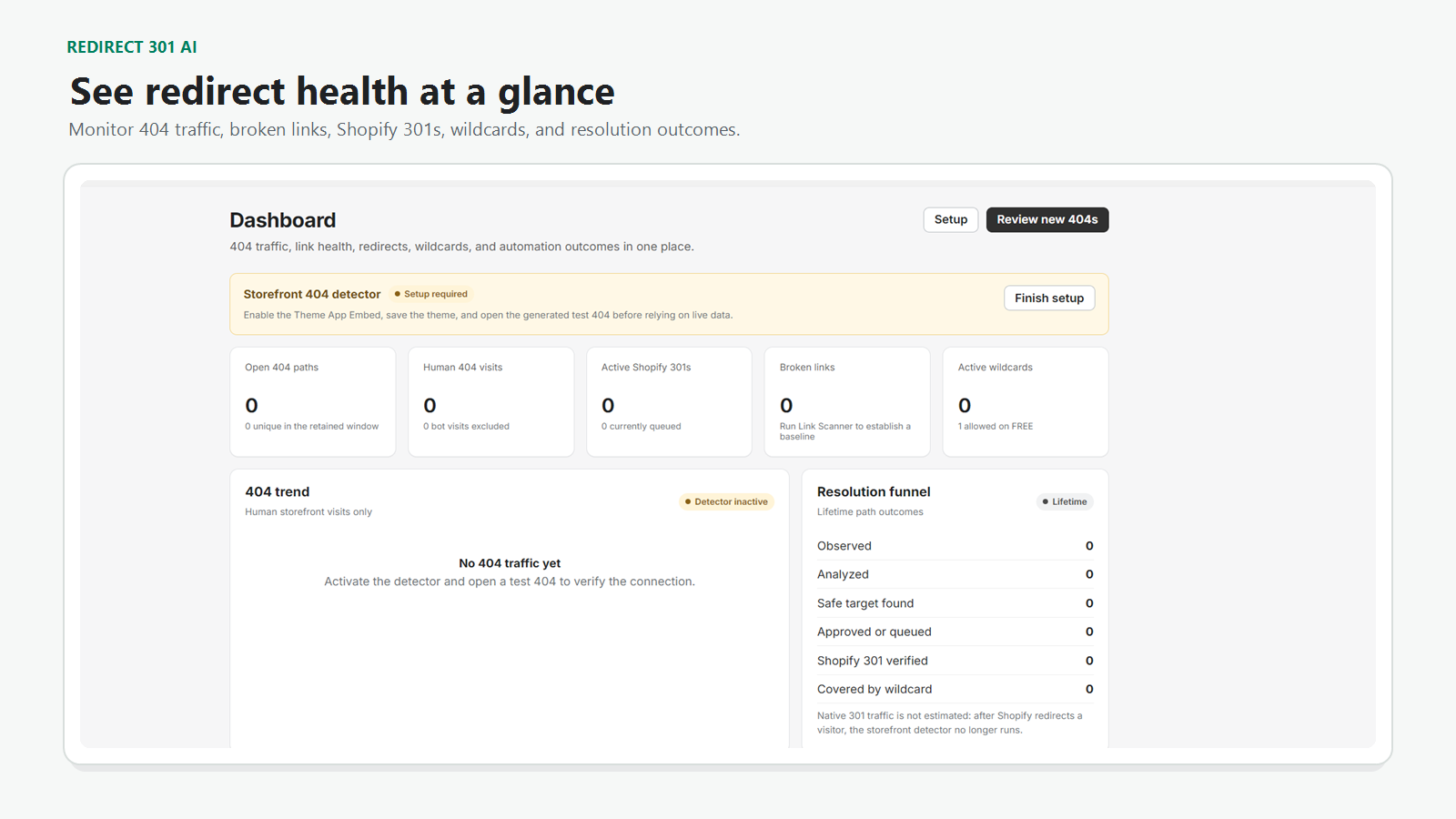
Track human 404 visits, broken links, active redirects, pattern coverage, and resolution outcomes in one calm dashboard.
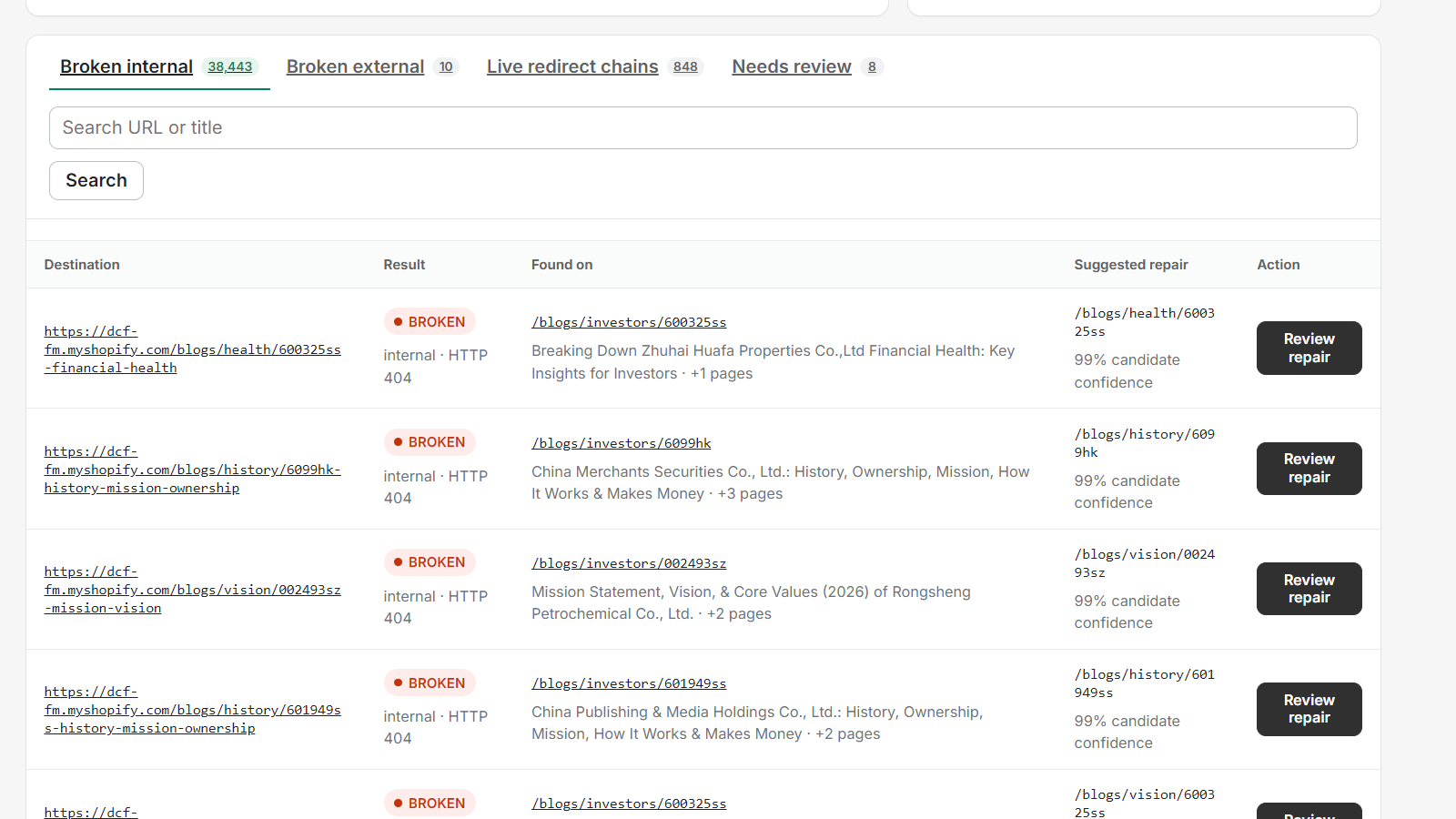
Crawl internal pages, inspect unique destinations, and separate confirmed failures from blocked or inconclusive checks.
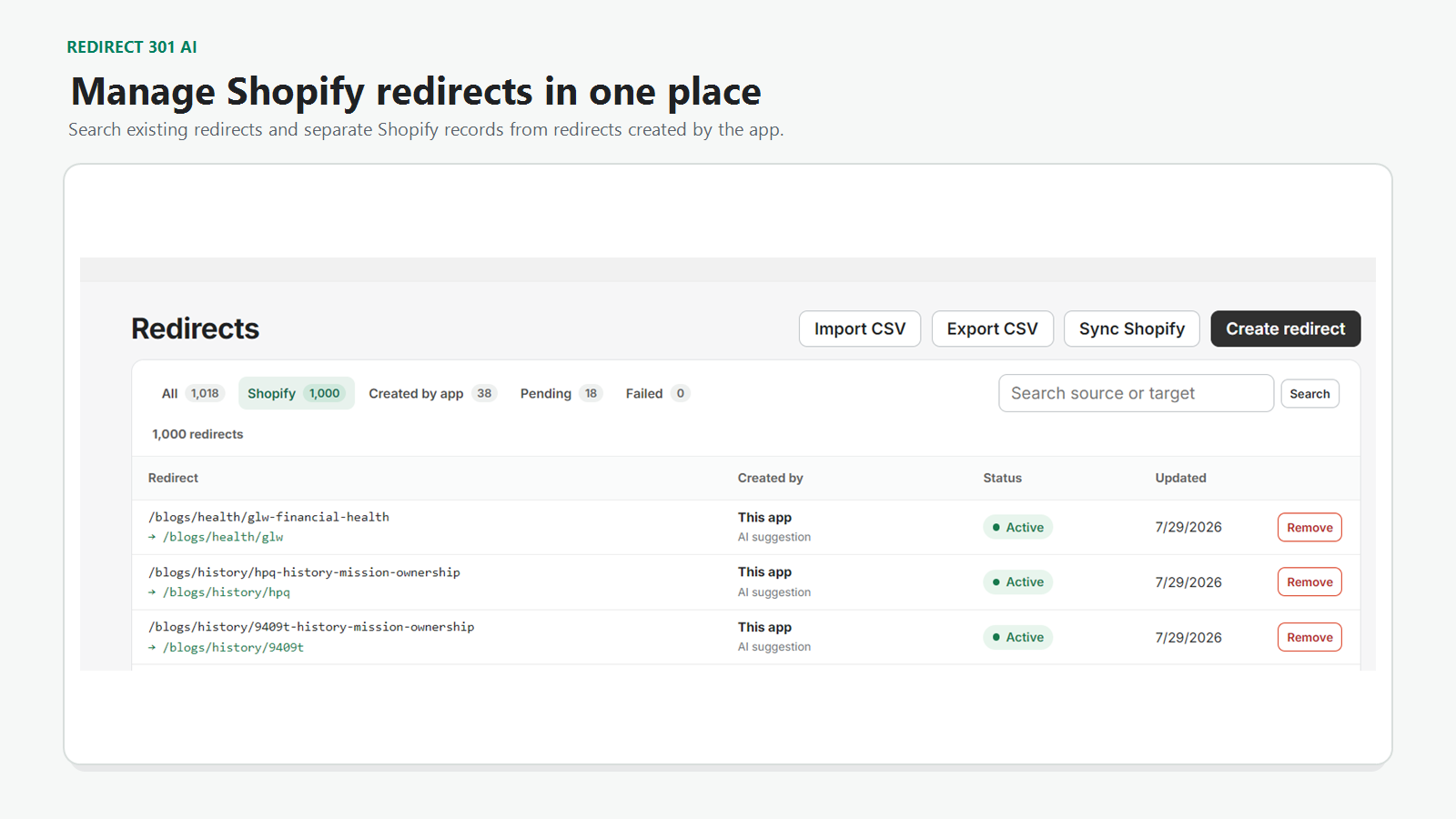
Search the redirect inventory, import or export CSV, and distinguish existing Shopify redirects from exact redirects created by the app.
AI can help discover repeatable URL patterns, but it never gets a direct line to your Shopify redirects. Every proposal must compile, simulate, preserve required path segments, and pass deterministic conflict checks.
/old-products/:slug
/products/{slug}
Compare the broken source, live target, visit count, confidence, and verification state before applying a redirect.
No visitor IPs, query strings, fragments, full referrers, or stored user-agent values.
Read the Privacy PolicyProducts stay with products, collections with collections, and every candidate still has to resolve live.
Automatic exact redirects still require fresh 404 evidence, a strong unambiguous match, and a live canonical target.
Approved work becomes exact URL redirect records in Shopify Admin, with ownership and failures visible in the app.

Use Free for a smaller store and manual review. Move to Pro for larger scans, longer history, and guarded automation.
Essential 404 discovery and manual redirect review.
Higher limits and safety-gated automation, with a 7-day trial.
Or $199/year. Billing and final plan availability are confirmed in Shopify.
Redirect 301 AI is deliberately precise about what it sees, what AI can do, and when Shopify gets a redirect.
No browser detector can promise complete coverage. The App Embed must be enabled on the published Online Store theme, and the request must render Shopify’s 404 template. Native redirects run before a 404 exists.
AI pattern proposals require merchant review, deterministic simulation, and activation. Optional Pro Safe Auto may create an exact redirect only after strict confidence, freshness, ambiguity, and live-target checks pass.
No. Preflight checks compare the source against Shopify redirects, live catalog paths, and queued work. A conflict is left untouched for merchant review.
The app stores normalized path-level observations and an eligible referrer hostname. It does not request or persist visitor IP addresses, full referrer URLs, query strings, fragments, or user-agent values.
The built-in detector is designed for Shopify Online Store themes. Hydrogen and other headless storefronts need a separate integration that is not included.